
In the first week of February 2025, global trade policy entered its most turbulent chapter since the 1930s. On 1 February 2025, invoking the International Emergency Economic Powers Act (IEEPA) of 1977—the first time IEEPA was used to levy broad import tariffs without a prior Section 301 or Section 232 investigation—the White House signed three executive orders imposing a 25% ad valorem tariff on all imports from Mexico and Canada (with Canadian energy resources taxed at 10%) and an additional 10% tariff across all imports from China on top of existing Section 301 duties. While the North American tariffs were paused for 30 days on 3 February 2025 following border-security commitments from Ottawa and Mexico City, the 10% additional US tariff on Chinese goods went into force at 12:01 AM EST on 4 February 2025. Within minutes, Beijing responded with a calibrated package of counter-tariffs, critical-mineral export controls, and antitrust probes. For allocators across Asia-Pacific, understanding the microeconomic pass-through of tariffs, China’s industrial counter-strategy, and how to position equity portfolios is paramount.
1. Timeline & Anatomy of the February 2025 Tariff Actions
Unlike the staggered lists of the 2018–2019 US–China trade conflict (Lists 1, 2, 3, and 4A), the February 2025 actions were structured as immediate, universal border measures with explicit retaliation clauses:
| Date (Feb 2025) | Jurisdiction & Authority | Specific Tariff / Trade Measure | Targeted Sectors & Status as of 9 Feb 2025 |
|---|---|---|---|
| 1 Feb 2025 | US Executive Orders (IEEPA) | 25% tariff on Mexico & Canada (10% on Canadian oil/gas/electricity); +10% universal tariff on China; suspension of Section 321 ($800) de minimis exemption. | North American tariffs paused for 30 days on 3 Feb; China +10% tariff took effect 4 Feb; China de minimis suspension temporarily paused 7 Feb pending customs collection systems. |
| 4 Feb 2025 | China State Council & MOFCOM | 15% tariff on US coal & liquefied natural gas (LNG); 10% tariff on US crude oil, agricultural machinery, large-displacement (>2.5L) vehicles & pickup trucks. | Scheduled to take effect 10 February 2025 (~US$14B–$20B of targeted US exports). |
| 4 Feb 2025 | China MOFCOM & General Administration of Customs | Immediate export licensing controls on 5 critical minerals: tungsten, tellurium, bismuth, molybdenum, and indium; Unreliable Entity List additions & SAMR antitrust probe into Google. | Effective immediately (4 Feb 2025); targets defense, semiconductor, solar, and aerospace supply chains where China holds 50%–80% global refining share. |
2. The Microeconomics of Tariff Incidence: Who Actually Pays?
In classical trade economics, an ad valorem tariff (t) creates a wedge between the foreign producer price (P*) and the domestic landed price paid by importers (PD = P*(1 + t)). Whether the foreign exporter absorbs the tariff by cutting P* (improving the importing nation’s terms of trade) or the domestic importer and consumer bear the burden through a higher PD depends on relative supply and demand elasticities and currency adjustments:
- Empirical Evidence from 2018–2019 (Amiti, Redding & Weinstein, 2019; Fajgelbaum et al., 2020): Granular customs-level studies of the 2018–2019 Section 301 tariffs published in the Journal of Economic Perspectives and the Quarterly Journal of Economics demonstrated nearly 100% pass-through of tariff rates into US duty-inclusive import prices. Rather than foreign exporters slashing factory-gate prices, US importers faced a sharp compression in gross margins or passed costs onto end consumers, while deadweight welfare losses mounted from costly supply-chain switching.
- Intermediate Inputs vs. Final Consumer Goods: Over half of cross-border trade consists of intermediate components rather than finished retail goods. When tariffs hit sub-assemblies—particularly across North American automotive supply chains where components cross the US–Mexico–Canada (USMCA) border six to eight times before final assembly—a 25% border tax compounds at each crossing, threatening severe disruption to industrial gross margins.
- Currency Offset & Monetary Policy Dilemma: In floating exchange-rate markets, tariff announcements typically drive US Dollar Index (DXY) strength as the taxed nation’s currency depreciates (e.g., USD/CNH testing 7.30–7.35 and CAD/MXN weakening). For the Federal Reserve, tariff-induced price spikes represent a classic supply shock that lifts near-term goods inflation while weighing on real GDP growth—complicating the path of interest-rate cuts in 2025.
3. China’s Structural Playbook: The 14th Five-Year Plan & Asymmetric Retaliation
Why did Beijing respond on 4 February 2025 with targeted duties on US energy (LNG, coal, crude) and critical-mineral export controls rather than matching Washington dollar-for-dollar across all US imports? The answer lies in the structural evolution of China’s economy since 2018 and its 14th Five-Year Plan (2021–2025).
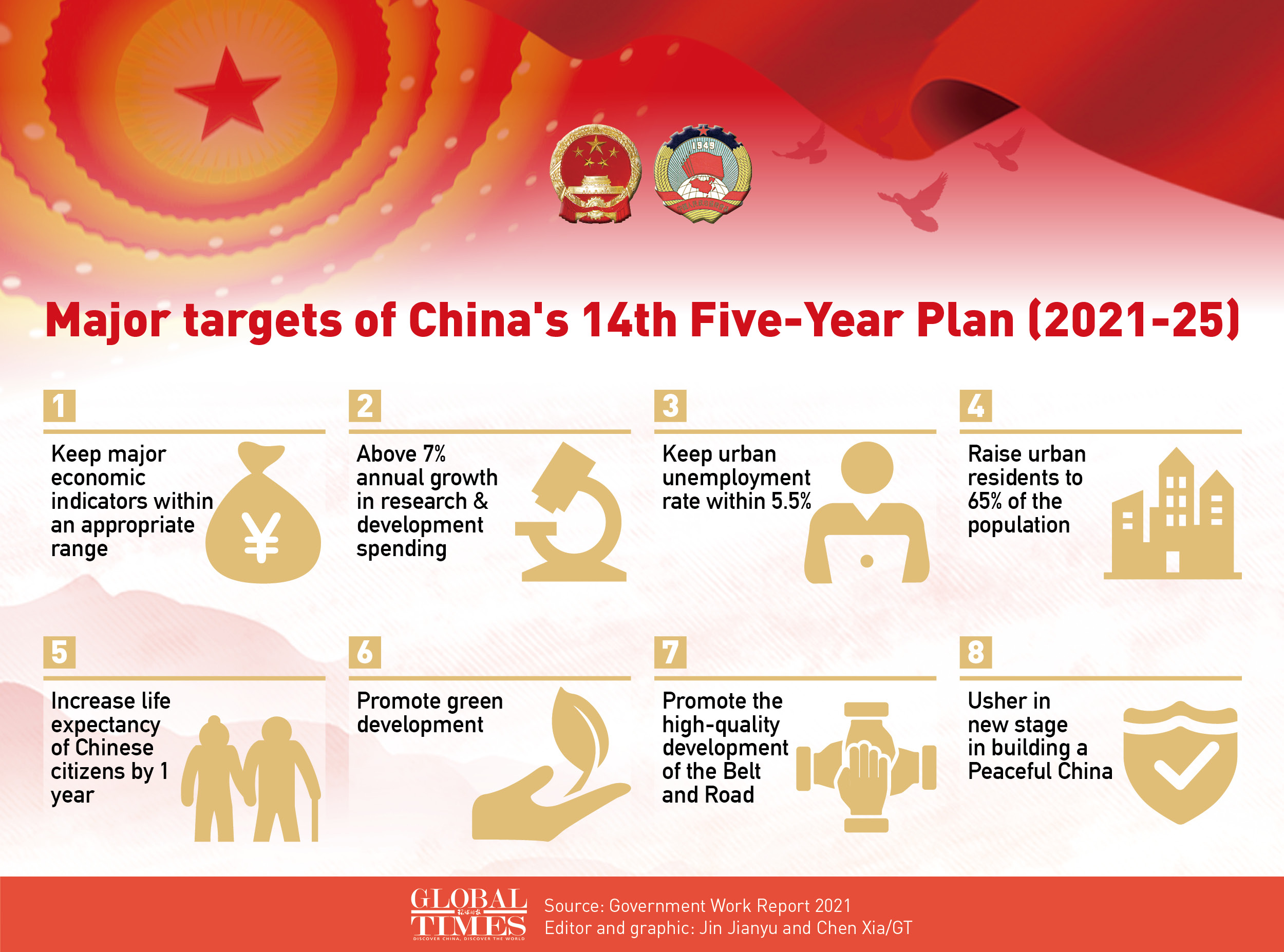
- “Dual Circulation” & Export Diversification: Adopted in March 2021, China’s 14th Five-Year Plan prioritized indigenous innovation in “New Quality Productive Forces”—electric vehicles (EVs), lithium-iron-phosphate (LFP) batteries, solar modules, industrial robotics, and mature-node semiconductors—while expanding trade integration with ASEAN (via RCEP), the Middle East, and Latin America. Direct exports to the United States now represent less than 15% of China’s total exports (roughly 2.8% of China’s GDP), giving policymakers room to respond selectively rather than imposing broad import tariffs that would raise input costs for domestic Chinese manufacturers.
- Re-Routing Energy Corridors: Because China significantly expanded discounted pipeline gas and seaborne crude imports from Russia and the Persian Gulf between 2022 and 2024, US LNG and crude oil accounted for less than 5% and 2% of China’s total imports in 2024—making US energy cargoes easy for Chinese state importers to swap or re-sell into Europe without hurting domestic power supply.
- Critical Minerals as Strategic Leverage: Following earlier 2023–2024 export restrictions on gallium, germanium, and antimony, the 4 February 2025 licensing controls on tungsten (where China accounts for ~80% of global output, vital for armor-piercing alloys and semiconductor tungsten hexafluoride wiring), tellurium (cadmium-telluride thin-film solar cells), and indium (indium-tin-oxide display coatings and fiber-optic lasers) demonstrate how supply-chain choke points have replaced simple tariff schedules as the primary arena of geoeconomic competition.
4. Portfolio Construction: Combining Fundamental Value with Systematic Breadth
For institutional and wealth allocators across APAC, tariff volatility creates both macro noise and rich cross-sectional dispersion:
- Bottom-Up Fundamental Value Investing: Headline tariff selloffs routinely drag down entire regional indices, creating mispricings in companies with domestically insulated cash flows, high net-cash balance sheets, and strong corporate governance reform (such as Japanese and South Korean industrial and financial franchises improving Return on Equity and share buybacks). Focusing on normalized free-cash-flow yield and margin of safety protects capital when sentiment swings.
- Systematic Equity Breadth: Because tariff schedules, exemptions, and retaliatory lists shift rapidly across thousands of Harmonized System (HS) product codes, systematic quantitative models—tracking supply-chain network linkages, geographic revenue exposure, earnings-revision breadth, and quality-value factor premia across global markets—provide disciplined diversification without relying on binary political predictions.
Sources, Policy Documents & Media Credits
Official Policy Releases & Economic Research (Published as of February 2025):
- The White House. (1 February 2025). Executive Orders Imposing Duties to Address the Synthetic Opioid Supply Chain in the People’s Republic of China and Situation at US Northern and Southern Borders (IEEPA 10% additional tariff on China effective 4 Feb 2025; 25% duties on Canada and Mexico). whitehouse.gov.
- Customs Tariff Commission of the State Council & Ministry of Commerce of the People’s Republic of China (MOFCOM). (4 February 2025). Announcement on Imposing Additional Tariffs on Certain Imported Goods Originating from the United States (10%–15% on LNG, Coal, Crude Oil, Agricultural Machinery) & Export Controls on Tungsten, Tellurium, Bismuth, Molybdenum, and Indium. english.mofcom.gov.cn.
- Amiti, Mary, Redding, Stephen J., & Weinstein, David E. (2019). “The Impact of the 2018 Tariffs on Prices and Welfare.” Journal of Economic Perspectives, 33(4), 187–210. DOI: 10.1257/jep.33.4.187.
- Fajgelbaum, Pablo D., Goldberg, Pinelopi K., Kennedy, Patrick J., & Khandelwal, Amit K. (2020). “The Return to Protectionism.” The Quarterly Journal of Economics, 135(1), 1–55. DOI: 10.1093/qje/qjz036.
- National People’s Congress of the People’s Republic of China. (March 2021). Outline of the 14th Five-Year Plan (2021–2025) for National Economic and Social Development and Vision 2035 (“Dual Circulation” and Strategic Technology Self-Reliance).
- U.S. Geological Survey (USGS). (January 2025). Mineral Commodity Summaries 2025 (Global production and refining shares for Tungsten, Tellurium, Bismuth, Molybdenum, and Indium). usgs.gov.
Image & Media Credits: Featured 3D tariff stamp illustration credited to Getty Images / iStockphoto; geopolitical and Five-Year Plan editorial graphics credited to their respective agency illustrators. Views expressed are personal and for educational commentary only.