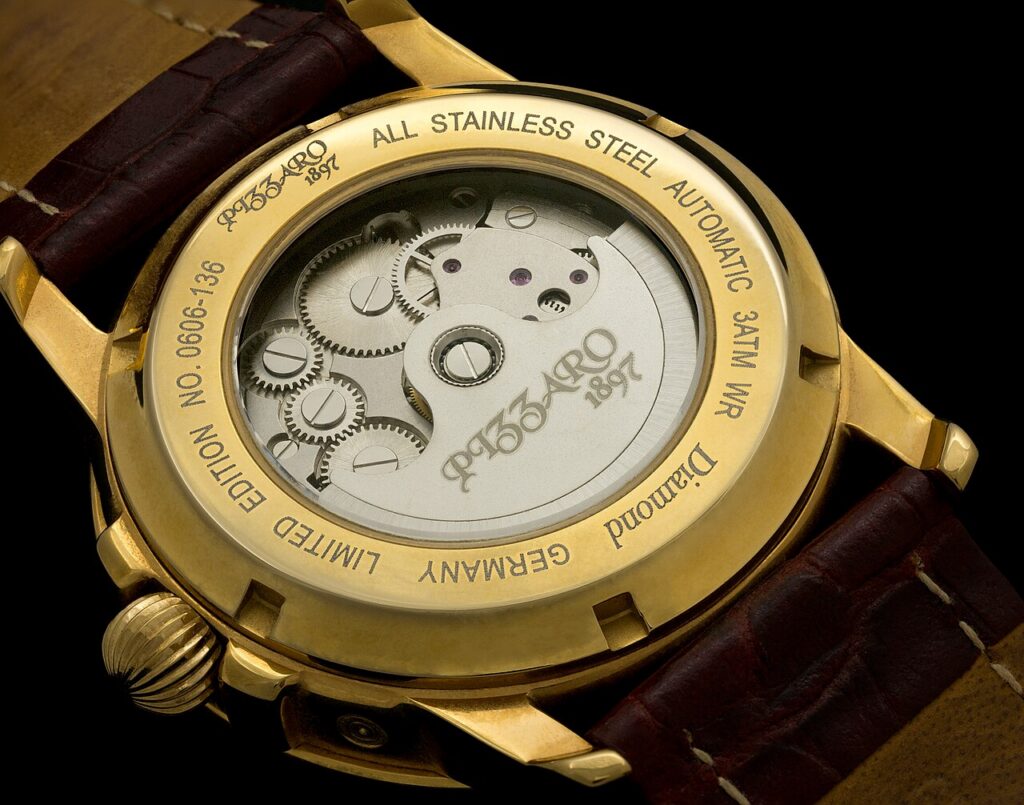
Few human artifacts merge applied physics, mechanical engineering, artistic micro-finishing, and historical narrative quite as intimately as a portable timepiece. What began in the late 15th century as clumsy iron-and-brass spring-driven drums worn around the neck has evolved into masterworks of micromachinery operating on fractions of a micron. Whether examining the revolutionary pendulum inventions of Christiaan Huygens, the gravitational tourbillon of Abraham-Louis Breguet, the thermal compensation of marine chronometers, or the electronic precision of quartz and Seiko’s Spring Drive, horology is a continuous quest to conquer friction, gravity, and thermal expansion in the pursuit of absolute timekeeping accuracy.
1. The Origins of Portable Time: From Nuremberg Eggs to Mainsprings
Before the invention of the mainspring in the early 1400s, mechanical clocks were stationary monuments driven by falling weights and regulated by foliot balances or verge escapements. The invention of the coiled steel mainspring—traditionally attributed to German locksmith Peter Henlein of Nuremberg around 1500–1510—liberated timekeeping from stationary architecture. These early portable devices, often housed in fire-gilt brass cases shaped like drums or spheres (“Nuremberg Eggs”), carried a fatal mechanical flaw: as the mainspring uncoiled, its torque dropped off dramatically, causing the watch to run progressively slower as the hours passed.

This torque variance was elegantly solved by the invention of the fusee—a conical pulley connected to the barrel via a fine gut line or steel chain. As the mainspring exerted peak torque when fully wound, the chain pulled on the narrowest tip of the cone (providing minimal mechanical leverage); as the spring unwound and lost torque, the chain pulled on the widening base of the cone, maintaining uniform force transmitted to the gear train.
2. The Scientific Revolution: Christiaan Huygens and the Balance Spring
The greatest leap in portable timekeeping accuracy occurred in 1675, when Dutch polymath Christiaan Huygens (building on his 1656 invention of the pendulum clock) introduced the balance spring (hairspring) to pocket watches. Prior to Huygens, pocket watches lacked a restoring force on the balance wheel, making them little more than novelty jewelry that gained or lost hours daily. By pairing a fine coiled spring to the balance wheel, Huygens created an isochronous harmonic oscillator.


Shortly thereafter, the Anglo-French genius Abraham-Louis Breguet (1747–1823) introduced the overcoil hairspring (the Breguet overcoil), raising the outer terminal curve of the hairspring upward to allow concentric breathing, which dramatically reduced positional rate errors.
Abraham-Louis Breguet: The Master Horologist
Often hailed as the father of modern horology, Breguet founded his Paris workshop on Quai de l’Horloge in 1775. His innovations reshaped navigation and statecraft: he invented the self-winding perpétuelle pocket watch (1780), the parachute shock-absorber system (1790), the first jump-hour watch, the sympathetic clock, and—most famously—patented the tourbillon in 1801. Recognizing that vertical pocket watches suffered positional rate errors due to Earth’s gravity acting upon the asymmetrical weight of the balance wheel and escapement, Breguet mounted the entire escapement and balance inside a rotating carriage that completed one full revolution every minute, averaging out gravity’s pull.

3. Horological Movements: Mechanical (Manual & Automatic), Quartz & Spring Drive
Modern timepieces operate across four major movement categories, each representing a distinct philosophy of power generation and frequency regulation:
| Movement Type | Power Source | Regulating Oscillator | Typical Frequency | Chronometric Accuracy |
|---|---|---|---|---|
| Mechanical Manual-Wound | Coiled mainspring wound by hand via crown | Balance wheel & hairspring | 21,600 vph (3 Hz) to 36,000 vph (5 Hz) | COSC: -4/+6 sec/day; High-End: ±2 sec/day |
| Mechanical Automatic (Self-Winding) | Mainspring wound by weighted internal oscillating rotor | Balance wheel & hairspring | 21,600 vph to 28,800 vph (4 Hz) | COSC: -4/+6 sec/day |
| Electronic Quartz | Silver-oxide battery or lithium cell | Synthetic quartz crystal tuning fork | 32,768 Hz | Standard: ±15 sec/month; Thermocompensated (TCQ): ±5 to ±10 sec/year |
| Seiko Spring Drive | Coiled mainspring | Tri-synchro regulator (Quartz oscillator + electromagnetic brake) | Continuous glide wheel (silent, non-stepping) | ±1 second per day (Spring Drive IC quartz reference) |
A. Mechanical Movements: Manual vs. Automatic
Mechanical movements comprise upwards of 100 to 1,000 micro-finished components interacting without a single electronic circuit. Manual-wind movements require the wearer to tension the mainspring daily by hand via the crown, engaging the ratchet wheel and click. Automatic movements integrate a semi-circular heavy metal weight (a tungsten, gold, or brass oscillating rotor) that pivots freely on ball bearings with the wearer’s wrist motion, driving reversing wheels to wind the mainspring barrel continuously while incorporating a slipping bridle to prevent over-tensioning.

B. The Quartz Revolution (1969)
On 25 December 1969, Seiko upended the global watch industry by launching the Seiko-Quartz Astron 35SQ. By passing an electric current from a battery through a synthetic quartz crystal shaped like a tiny tuning fork, the crystal vibrates at an exact piezoelectric resonant frequency of 32,768 Hz. An integrated circuit (IC) counts these oscillations, stepping a tiny stepping motor once per second. Quartz watches bypassed the mechanical friction and positional errors of balance wheels, instantly achieving accuracy measured in seconds per month rather than seconds per day—nearly destroying the traditional Swiss mechanical watch industry during the 1970s and 1980s Quartz Crisis.
C. Seiko Spring Drive: The Marriage of Mainspring and Quartz
Conceived by Seiko engineer Yoshikazu Akahane in 1977 and perfected over 28 years before its commercial release in 2005, the Spring Drive is a masterclass in hybrid engineering. It retains a traditional mechanical mainspring as its sole power source, but replaces the escapement and balance wheel with a Tri-Synchro Regulator. As the mainspring unwinds, it drives a glide wheel that generates a microscopic electrical current. This current powers a quartz oscillator and an integrated circuit that applies gentle electromagnetic braking to the glide wheel 8 times per second. The result is absolute quartz-level precision combined with a perfectly silent, continuous gliding second hand that never ticks.
4. Chronometric Accuracy Standards & Certifications
To verify timekeeping precision objectively, watch manufacturers submit movements to rigorous independent testing authorities:
- COSC (Contrôle Officiel Suisse des Chronomètres): Founded in 1973 in Switzerland, COSC tests unencased mechanical movements over 15 days across 5 positional orientations and 3 temperature levels (8°C, 23°C, 38°C). A movement must achieve a daily mean rate tolerance of -4 to +6 seconds per day to earn official Chronometer certification.
- Master Chronometer (METAS): Established in 2015 by Omega and the Swiss Federal Institute of Metrology (METAS), this certification tests fully cased wristwatches against magnetic fields up to 15,000 gauss, water resistance, power reserve, and daily precision tolerances of 0 to +5 seconds per day under rigorous simulated wear.
- Grand Seiko Inspection Standard: Exceeding COSC standards, Grand Seiko mechanical movements are tested cased for 17 days across 6 positions and 3 temperatures, requiring a stringent rate tolerance of -3 to +5 seconds per day (and Special standards of -2 to +4 sec/day).
A mechanical watch movement is a living ecosystem of micro-gears, springs, and leverage—turning the steady, relentless march of time into a visible, tactile art form.
Sources, Historical Archives & Media Credits
Horological Literature & Historical Archives:
- Daniels, George (1981). Watchmaking. London: Sotheby Publications (Definitive technical treatise on mechanical watch design, escapements, and gear trains).
- Landes, David S. (1983). Revolution in Time: Clocks and the Making of the Modern World. Cambridge: Harvard University Press.
- Britten, F. J. (1894). Former Clock & Watchmakers and Their Work. London: E. & F. N. Spon (Historical records on Peter Henlein, Christiaan Huygens, and Abraham-Louis Breguet).
- Contrôle Officiel Suisse des Chronomètres (COSC). (2022). ISO 3159 Chronometer Testing Standards and Certification Protocols. cosc.ch.
- Seiko Watch Corporation. (2005 / 2022). The Spring Drive Technical Development Archive & Tri-Synchro Regulator Patents. seikowatches.com.
Image & Media Credits: Historical drum watch, portraits of Christiaan Huygens and Abraham-Louis Breguet, and transparent automatic movement caseback photographs sourced from Wikimedia Commons (Public Domain / Creative Commons). Used for non-commercial educational horological commentary.