Outside of financial markets, team sports, high-altitude mountain trails, and mechanical horology are the arenas where I spend most of my hours. Whether laced up on a floodlit football pitch at night, sprinting through rapid 5-on-5 transitions on an indoor floorball court, officiating a competitive match with the whistle as a qualified referee, or studying European football tactics and mechanical watch movements, each pursuit sharpens a distinct dimension of spatial awareness, composure under pressure, and appreciation for enduring craft.
1. Modern European Football Tactics: Structural Financial Rules, Half-Spaces & Pressing Traps
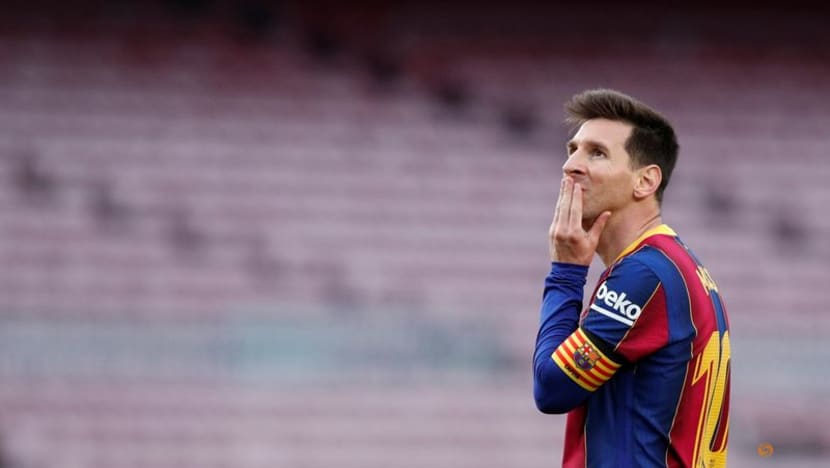
The 2021–22 European football season began with a moment that bridged corporate finance and sporting history: on 5–6 August 2021, Lionel Messi bid a tearful farewell to FC Barcelona after 21 years—not because the player and club failed to agree on terms (Messi had agreed to a 50% wage reduction), but because Barcelona’s wage-to-turnover ratio exceeded 110% under La Liga’s strict Límite Coste Plantilla Deportiva (LCPD) salary cap rules even without his contract. That watershed event underscored how modern elite football is governed as much by balance-sheet discipline off the pitch as by positional geometry on it.
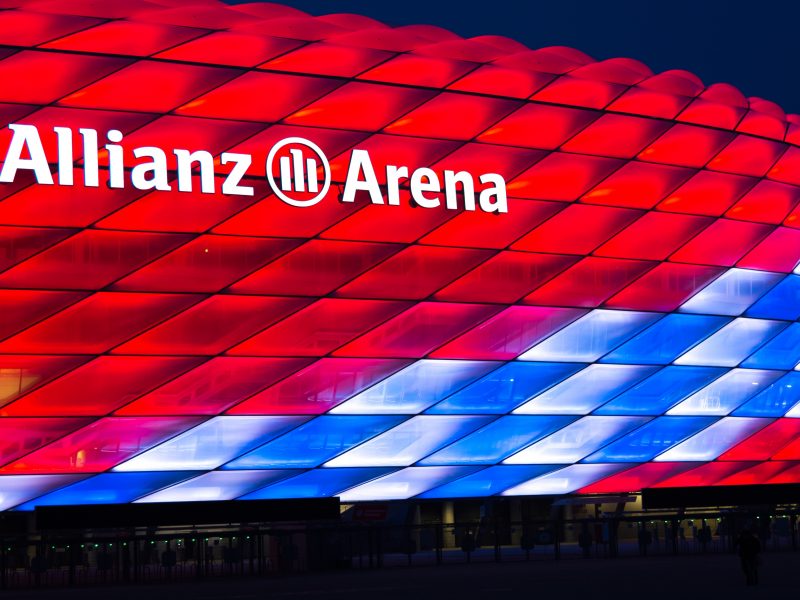
On the grass, watching sides across the 2021–22 UEFA Champions League and top European leagues—from Julian Nagelsmann’s fluid 3-2-4-1 asymmetric build-up at Bayern Munich at the Allianz Arena, to Pep Guardiola’s Juego de Posición (Positional Play) at Manchester City and Jürgen Klopp’s counter-pressing (Gegenpressing) at Liverpool—reveals four tactical mechanics that separate elite teams from the rest:
- The Five Vertical Channels & Half-Space Occupation (Halbräume): In positional play methodology, the pitch is divided vertically into five lanes: the two wide wing channels, the central corridor, and the two interior half-spaces between the centre-backs and full-backs. Unlike the touchline (where the sideline restricts a player’s passing angles by 180 degrees) or the central lane (where opposing defensive pivots pack maximum density), receiving on the half-turn in the half-space opens diagonal passing lines toward both the far-post runner and the overlapping wing-back.
- Inverted Full-Backs & 2-3-5 / 3-2-5 Attacking Rest-Defence: Rather than sending both full-backs overlapping to the corner flag—which leaves the two centre-backs exposed to 2-v-2 counter-attacks in wide channels—modern build-up tucks one or both full-backs inside alongside the single pivot (#6) to form a 2-3 or 3-2 Rest-Defence (Restverteidigung) shield behind the five-man attacking line.
- Cover Shadows & Pressing Triggers: High pressing is never headless sprinting. When an attacking midfielder or striker presses an opposing centre-back, they arc their run so their body casts a cover shadow directly over the passing lane into the opponent’s central defensive midfielder. A backwards pass, a heavy touch toward a player’s weaker foot, or an aerial pass into a touchline-facing full-back serves as the collective pressing trigger to collapse the space simultaneously.
- Pre-Scanning (Visual Exploratory Activity): Empirical tracking studies by Geir Jordet show that elite midfielders scan over their shoulders 0.5 to 0.8 times per second in the 10 seconds before receiving the ball—mapping where space and pressure sit before their first touch.
2. Playing Football, Floorball & Officiating Through the Referee’s Lens
Playing both football and floorball creates a fascinating athletic crossover. Sanctioned globally by the International Floorball Federation (IFF) and deeply popular across Singapore’s school, university, and club leagues, floorball is played 5-v-5 (plus goalkeepers) on a 40m × 20m indoor court enclosed by 50cm rounded rink boards with a 23-gram, 72mm perforated hollow plastic ball. Because the boards keep the ball in continuous play and substitutions happen on the fly every 45 to 90 seconds, floorball demands explosive anaerobic repeat-sprint ability, low-hip deceleration, instant stick-blade control in congested pockets, and relentless transition awareness between a 2-1-2 high press and a compact 2-2-1 defensive box.
| Dimension | 11-a-Side Football (IFAB) | 5-v-5 Indoor Floorball (IFF) | Refereeing & Officiating Takeaway |
|---|---|---|---|
| Playing Surface & Dimensions | 100–110m × 64–75m turf/grass pitch | 40m × 20m indoor court with 50cm boards | Requires adapting movement patterns from long diagonal sprints (football) to rapid boundary positioning (floorball). |
| Metabolic & Pacing Profile | 90-minute aerobic base punctuated by repeated 20–40m high-speed runs | High-intensity anaerobic intervals (45–90s shifts) with continuous board rebounds | Maintaining low heart-rate composure in the final 15 minutes prevents late cognitive errors when calling fouls. |
| Contact & Foul Thresholds | Law 12: Careless (foul only), Reckless (Yellow Card), Excessive Force (Red Card) | IFF Rule 6: Shoulder-to-shoulder permitted; stick-checking, high stick, or pushing into boards penalized (2-min / 5-min bench penalties) | Instant calibration of contact mechanics—separating clean upper-body shielding from illegal trips or stick infractions. |
Stepping onto the pitch as a referee changes how you experience competition forever. Under the IFAB Laws of the Game 2021/22, three officiating principles carry directly into professional life:
- Viewing Angle Over Raw Proximity: Being three metres from a challenge is counterproductive if a player’s torso blocks your line of sight. Running a proactive diagonal patrol—and sprinting wide before a tackle arrives—creates a clean “window” between the defender and attacker so you can judge point-of-contact, stud height, and ball deflection objectively.
- The Advantage Clause (IFAB Law 5.3): The best refereeing intervention is often a wide two-armed signal and a loud “Play on—Advantage!” When a team is fouled in midfield while springing a 3-v-2 break, blowing the whistle immediately actually punishes the fouled team. Waiting two to three seconds to see whether the advantage materializes—and issuing any warranted Yellow Card for a reckless tackle at the next stoppage—requires reading the tactical rhythm of the match.
- Game Management & Emotional Composure: Players immediately sense hesitation or defensiveness. Speaking concisely, maintaining calm posture when 22 players have elevated adrenaline, and applying consistent foul thresholds from Minute 1 to Minute 90 keeps the match fair and controlled.
3. High-Altitude Mountain Trekking & Enthusiasm for Fine Horology
Away from the pitch and the court, two quieter passions balance out the fast pace of city life: high-altitude mountain trekking across ranges like the Himalayas and the Caucasus—where multi-day ascents above 3,500–5,000 metres strip life down to cadence, breath, hydration, and camaraderie—and being an avid enthusiast of heritage and independent watchmaking.
What makes mechanical horology endlessly compelling to an enthusiast is that a fine watch is completely unnecessary for telling the time—and therefore exists purely as a celebration of human ingenuity, micro-mechanical engineering, and hand-finishing:
- Vacheron Constantin & The Geneva Seal (Poinçon de Genève): Founded in 1755 as the world’s oldest continuously operating watch manufacture, Vacheron Constantin exemplifies classical Genevan haute horlogerie—from the Maltese-cross integrated bracelet and interchangeable strap engineering of the Overseas (Ref. 4500V, powered by the in-house Calibre 5100 with a 22k gold rotor) to the tilted driving-watch geometry of the Historiques American 1921 and ultra-thin Patrimony dress calibres.
- Cartier & The Art of Shaped Cases: From Louis Cartier’s 1904 Santos (the first purpose-built pilot’s wristwatch created for Alberto Santos-Dumont) and the 1917 Tank inspired by Renault FT-17 tracks to the organic curves of the Baignoire and Tortue, Cartier proves that dial proportions, Roman numerals, blued-steel hands, and case architecture are every bit as artistic as movement complications.
- Rolex & Chronometric Durability: Defined by Hans Wilsdorf’s 1926 Oyster hermetic case, the 1931 Perpetual self-winding rotor, and Superlative Chronometer certification (-2/+2 seconds per day), references across the Datejust, Day-Date, Submariner, and GMT-Master II set the industrial benchmark for everyday mechanical robustness.
- Independent Horology (Atelier Akrivia / Rexhep Rexhepi): At the pinnacle of modern independent watchmaking, Kosovan-born Geneva watchmaker Rexhep Rexhepi (founder of Atelier Akrivia, winner of the 2018 GPHG Men’s Watch Prize for the Chronomètre Contemporain I) revived historical observatory chronometer symmetry paired with breathtaking hand-craftsmanship—inward and outward hand-bevelled bridges (anglage polished with gentian wood and diamond paste), black-polished (poli noir) steel components, and grand feu enamel dials.
Sources, Sporting Rulebooks & Media Credits
Official Rulebooks, Tactical Literature & Horological References (Available as of March 2022):
- International Football Association Board (IFAB). (2021). Laws of the Game 2021/22 — Law 5 (The Referee: Advantage Clause & Positioning) and Law 12 (Fouls and Misconduct: Careless, Reckless, and Using Excessive Force). theifab.com.
- International Floorball Federation (IFF). (2018 / 2022 Edition). Rules of the Game – Floorball (Official rink dimensions, equipment regulations, and officiating signals). floorball.sport.
- Wilson, Jonathan (2013). Inverting the Pyramid: The History of Soccer Tactics. Nation Books.
- Jordet, Geir, Bloomfield, J., & Heijmerikx, J. (2013). “The Hidden Foundation of Field Vision in English Premier League (EPL) Soccer Players.” MIT Sloan Sports Analytics Conference; & Spielverlagerung Tactical Analysis Archive (2014–2022). spielverlagerung.com.
- FC Barcelona Official Statement (5–6 August 2021). Leo Messi Not Staying at FC Barcelona Due to La Liga Financial and Structural Obstacles (LCPD Salary Cap Regulations). fcbarcelona.com.
- Fondation de la Haute Horlogerie (FHH), Grand Prix d’Horlogerie de Genève (GPHG 2018 Archives: Akrivia Chronomètre Contemporain), & Poinçon de Genève Official Horological Standards. hautehorlogerie.org.
Image & Media Credits: Featured image of Lionel Messi credited to Reuters (6 August 2021); Allianz Arena stadium photograph credited to FC Bayern Munich / stadium press archive. Used for non-commercial editorial commentary.