
In finance, every undergraduate student learns the exponential formula for compound interest in their first week, yet remarkably few people apply the exact same mathematics to their own cognitive habits, emotional temperament, and career trajectory. As Bill Gates famously observed, humans routinely overestimate what we can accomplish in a single year and dramatically underestimate what we can achieve over ten years of quiet, deliberate compounding. Managing a path to wisdom is not about chasing viral shortcuts or overnight breakthroughs; it is about architecting a personal operating system of mental models, epistemic humility, and physical durability that thrives under uncertainty.
1. The DIKW Hierarchy: Moving from Raw Data to Actionable Wisdom
We live in an era of unprecedented information abundance—with real-time market terminals, central-bank transcripts, and 24-hour news feeds in our pockets—yet investment horizons have shrunk and emotional over-reaction remains as prevalent as ever. Organizational theorist Russell Ackoff explained why in his seminal 1989 paper “From Data to Wisdom” by structuring human understanding into a four-tier hierarchy:
| Tier in DIKW Pyramid | Core Definition (Ackoff, 1989) | Financial Markets Example | Personal & Career Example |
|---|---|---|---|
| 1. Data | Raw, unorganized symbols and observations without context. | A single tick showing a stock trading at $42.50 or CPI printing at 4.4%. | Logging a morning heart rate of 52 bpm or reading 20 pages of a book. |
| 2. Information | Data processed to answer Who, What, Where, and When. | Knowing $42.50 represents a 12x trailing P/E multiple after a 20% sector selloff. | Tracking your weekly sleep efficiency and training volume against your work schedule. |
| 3. Knowledge | The application of data and information to answer How systems interact. | Understanding how rising discount rates and supply-side shocks impact operating margins and valuation multiples. | Knowing how morning sunlight, nutrition, and deliberate practice improve cognitive focus. |
| 4. Wisdom | Evaluated understanding that answers Why—judgement, long-term perspective, and ethical/temperamental restraint. | Having the behavioural discipline to buy high-quality undervalued businesses when headlines are fearful and hold through noise. | Choosing long-term relationships, reputation, health, and compounding skills over short-term ego or quick wins. |
As Ackoff noted, the first three tiers (Data, Information, and Knowledge) deal with the past and with efficiency—doing things right. Wisdom deals with the future and with effectiveness—doing the right things, and knowing what to ignore.
2. Cognitive Architecture: System 1 vs. System 2, Growth Mindset & Process vs. Outcome
Why do smart, well-informed people still make avoidable mistakes in both markets and life? Combining insights from cognitive psychology, decision science, and behavioural economics gives us four practical guardrails:

- System 1 vs. System 2 Thinking (Daniel Kahneman, 2011): In Thinking, Fast and Slow, Nobel laureate Daniel Kahneman (building on decades of research with Amos Tversky) demonstrated that human cognition operates across two modes. System 1 is fast, automatic, associative, and emotional—essential for dodging a tackle on the football pitch, but prone to severe cognitive biases in financial markets: Loss Aversion (where the psychological pain of a loss is roughly 2.0 to 2.5 times as intense as the pleasure of an equivalent gain), Recency & Availability Bias (extrapolating the last six months into eternity), and Confirmation Bias. Engaging System 2—our slower, effortful, deliberative reasoning—requires written investment theses, base-rate checklists, and sleep-rested prefrontal cortex function.
- Separating Decision Quality from Outcome Quality (Annie Duke, 2018): In probabilistic fields like investing, business development, and sport, a sound decision can still produce a bad short-term outcome due to luck (variance), and a reckless decision can occasionally get lucky. Judging decisions strictly by their immediate result—what decision theorists call “resulting”—destroys long-term discipline. Wisdom lies in auditing the quality of your process and information set at the time the decision was made.
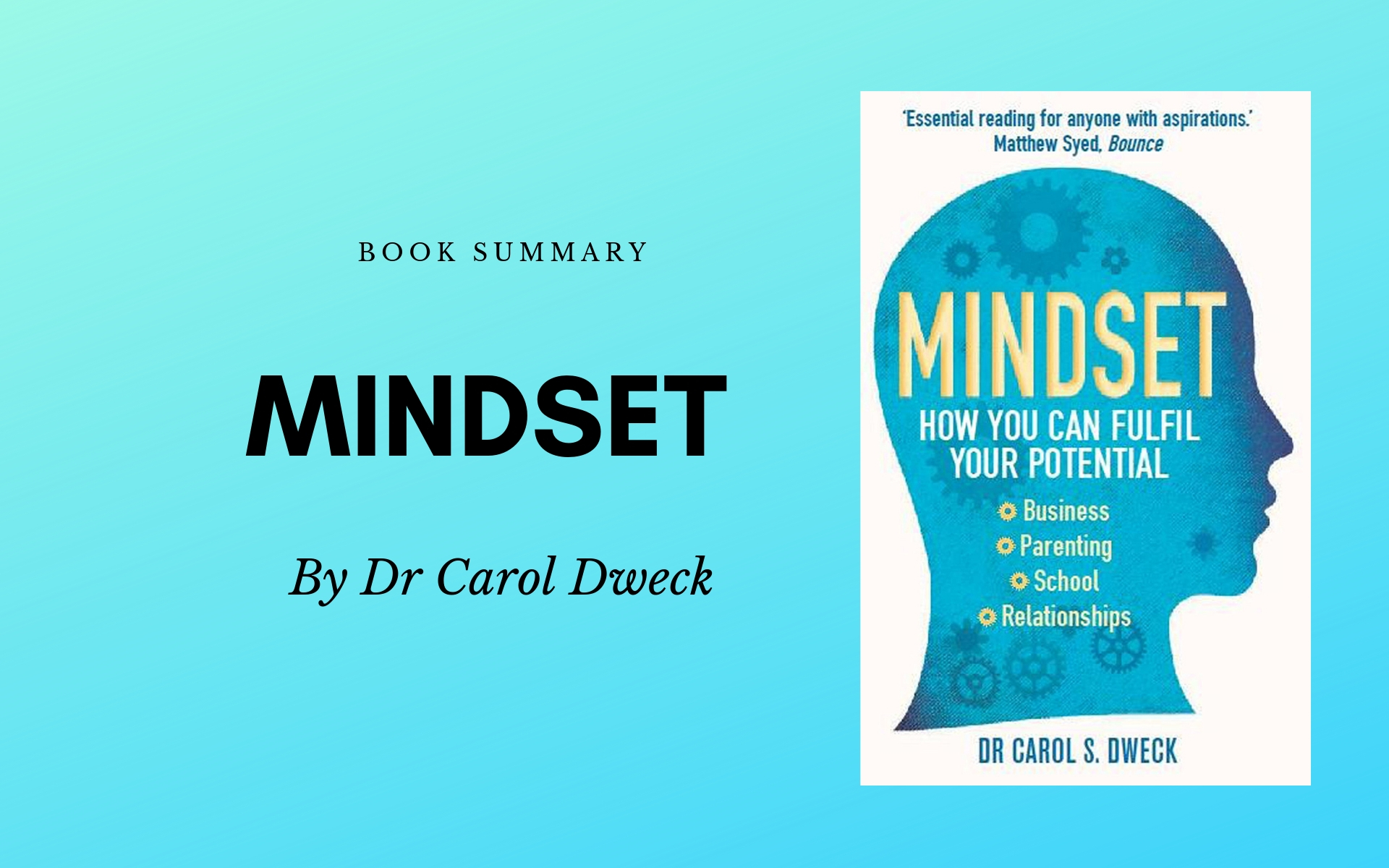
- Fixed vs. Growth Mindset (Carol Dweck, 2006): Stanford psychologist Carol Dweck showed that individuals who view intelligence and professional skill as fixed traits avoid difficult challenges for fear of looking inadequate. Embracing a Growth Mindset—treating a tough client question, a rejected proposal, or a difficult exam module in Finance as diagnostic data on where to sharpen your craft—turns every obstacle into fuel.
- The Mathematics of 1% Daily Habits (James Clear, 2018): In Atomic Habits, James Clear popularised Sir Dave Brailsford’s doctrine of the aggregation of marginal gains. Improving by 1% each day compounds over a 365-day year to (1.01)365 = 37.78× your starting baseline, whereas a 1% daily decline erodes to (0.99)365 = 0.0255. Sustainable transformation comes not from setting louder goals, but from designing low-friction daily Cue → Craving → Response → Reward systems anchored in identity.
3. The Hybrid Ethos: Why Physical & Intellectual Discipline Reinforce Each Other
One of the most enduring lessons I have learned is that mental resilience and physical conditioning are not separate compartments—they feed the exact same nervous system. As entrepreneur, military veteran, and endurance athlete Nick Bare emphasizes in the “Go One More” hybrid athlete philosophy, you do not have to choose between pursuing excellence in your career and pushing your physical limits on the run course, in the gym, on the pitch, or in the mountains.

When you voluntarily step into physical friction—completing interval sessions in Singapore’s humidity, trekking up steep high-altitude switchbacks when your lungs are burning, or staying composed in the final ten minutes of a tight match—everyday professional pressure stops feeling overwhelming. Conversely, the analytical rigour cultivated in Finance—measuring inputs honestly, respecting downside risk, and thinking across multi-year horizons—keeps your physical training structured, injury-free, and sustainable for decades.
Consistency over intensity: small, well-reasoned habits repeated across years will always outperform sporadic bursts of unguided effort.
Sources, Books & Media Credits
Foundational Literature & Frameworks (Published as of March 2022):
- Kahneman, Daniel (2011). Thinking, Fast and Slow. New York: Farrar, Straus and Giroux (System 1 vs. System 2 cognitive architecture, Prospect Theory & Loss Aversion). Publisher Link.
- Clear, James (2018). Atomic Habits: An Easy & Proven Way to Build Good Habits & Break Bad Ones. New York: Avery / Penguin Random House (1% daily marginal gains & identity-based habit loops). jamesclear.com.
- Dweck, Carol S. (2006). Mindset: The New Psychology of Success. New York: Random House (Fixed vs. Growth Mindset framework).
- Duke, Annie (2018). Thinking in Bets: Making Smarter Decisions When You Don’t Have All the Facts. Portfolio / Penguin Random House (Separating decision process quality from outcome luck / “resulting”).
- Ackoff, Russell L. (1989). “From Data to Wisdom.” Journal of Applied Systems Analysis, 16, 3–9 (The DIKW Hierarchy: Data, Information, Knowledge, Wisdom).
- Bare, Nick (2020–2022). The Bare Performance Podcast & “Go One More” Hybrid Athlete Philosophy. Bare Performance Nutrition (BPN). nickbare.com.
Image & Media Credits: Hybrid athlete photograph credited to Nick Bare / Bare Performance Nutrition; “Managing a Path to Wisdom”, “Mindset”, and “Grow” editorial illustrations credited to their respective creators. Used for non-commercial educational reflection.